
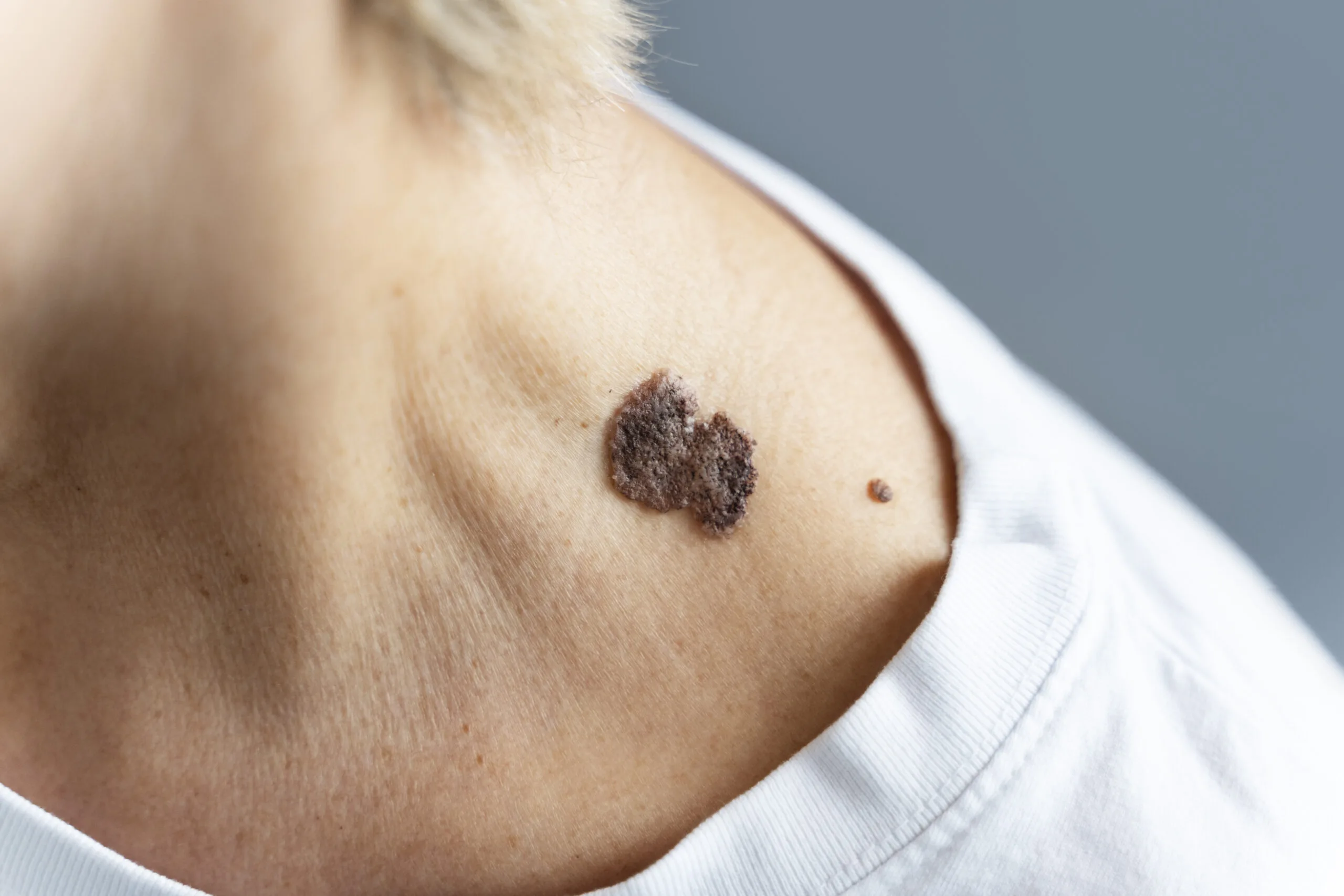
Squamous Cell Carcinoma
in Celina, TX

Everoak Dermatology provides expert diagnosis and treatment for squamous cell carcinoma in Celina, TX. This common form of skin cancer can develop from prolonged sun exposure or other risk factors. Early detection and prompt care are essential for the best outcomes. Our experienced dermatologists are here to support your skin health.

What Is Squamous Cell Carcinoma

Squamous cell carcinoma is a type of skin cancer that arises from the squamous cells found in the outer layers of the skin. It often appears as a red, scaly patch, a sore that does not heal, or a raised growth with a central depression. While it can be caused by cumulative sun exposure, it may also develop on areas not typically exposed to sunlight. Early diagnosis and treatment are important to prevent the cancer from spreading or becoming more serious.

Key Symptoms to Watch For

Persistent Red or Scaly Patch
A persistent red or scaly patch on the skin is a common early sign of squamous cell carcinoma. These patches may be rough to the touch and can slowly increase in size over time. It’s important to monitor any new or changing areas on your skin and consult a dermatologist if they do not resolve.
Non-healing sores or ulcers that remain open or crusted for weeks may indicate squamous cell carcinoma. Unlike typical wounds, these lesions resist healing and may ooze or bleed intermittently. Persistent sores on sun-exposed areas warrant prompt evaluation by a medical professional.
A raised growth with a central depression is another possible symptom of this skin cancer. These growths can appear dome-shaped or have a crater-like center, sometimes developing a rough or scaly surface. Early recognition and treatment are essential to prevent further progression.
Thickened or wart-like areas may develop as squamous cell carcinoma grows. These lesions often feel firm and can be mistaken for common warts or benign skin conditions. If you notice a new or changing thickened spot, especially in sun-exposed areas, seek professional evaluation.
Tenderness, pain, or unexpected bleeding from a skin lesion can be warning signs of squamous cell carcinoma. Even minor trauma may cause these areas to bleed or become sore. Any persistent tenderness or unexplained bleeding should be assessed by a dermatologist as soon as possible.

Top Causes of Squamous Cell Carcinoma

The primary cause of squamous cell carcinoma is long-term exposure to ultraviolet (UV) radiation from sunlight or tanning beds. Additional risk factors include having fair skin, a history of frequent sunburns, weakened immune system, or exposure to certain chemicals. Genetics and previous skin injuries may also contribute to the development of this skin cancer.
Check Your Insurance Coverage

Benefits of Early Squamous Cell Carcinoma Treatment

Why Choose Everoak Dermatology 

At Everoak Dermatology, our board-certified dermatologists combine advanced expertise with compassionate care for squamous cell carcinoma. We use state-of-the-art diagnostic tools and personalized treatment plans to ensure the best possible outcomes for each patient. Our team is dedicated to providing clear communication, ongoing support, and a comfortable environment for your skin cancer treatment journey. 
Not sure which treatment is best for you?
Check Your Insurance Coverage
Testimonials
If you want to do a skin-cancer screening, I 100% recommend Dr. Karavan. She has an extremely sharp eye and the goal is to hunt down the ugly duckling and take it. I’m very impressed with her attention to detail and am very grateful for her! She saved my life and was to the point. Dr. Karavand is not playing around when it comes to melanoma detection 👍

- Crystal D.

Healthier Skin
Starts Today
From life-saving skin cancer screenings to confidence-boosting aesthetic treatments, Everoak Dermatology is here to care for you at every stage.