
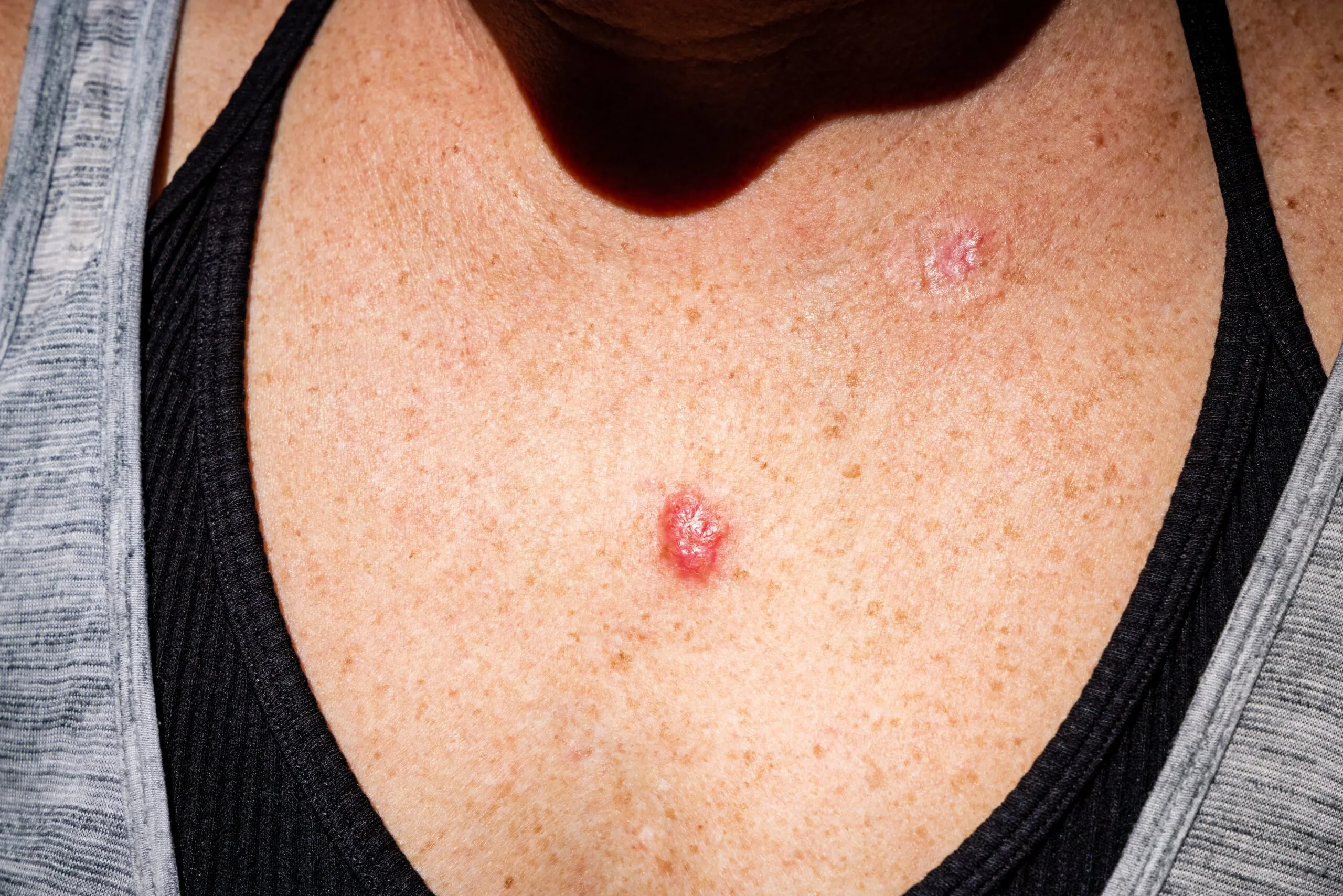
Basal Cell Carcinoma
in Celina, TX

Everoak Dermatology specializes in diagnosing and treating basal cell carcinoma in Celina, TX. Basal cell carcinoma is the most common type of skin cancer, typically caused by prolonged sun exposure. Early detection and expert care are essential to ensure effective treatment and minimize complications. Our experienced dermatology team is dedicated to providing personalized care for every patient.

What Is Basal Cell Carcinoma

Basal cell carcinoma is a type of skin cancer that develops in the basal cells, which are found in the outermost layer of the skin. It often appears as a small, pearly bump or a flat, flesh-colored patch, most commonly on sun-exposed areas like the face and neck. Although it grows slowly and rarely spreads to other parts of the body, early treatment is important to prevent local tissue damage. Regular skin checks can help detect basal cell carcinoma at an early, more treatable stage.

Common Symptoms

Pearly or Waxy Bumps
A common sign of basal cell carcinoma is the appearance of a small, pearly or waxy bump on sun-exposed skin. These bumps may be translucent, pink, or flesh-colored and can sometimes develop tiny blood vessels on their surface. They often grow slowly and may go unnoticed for months.
Some basal cell carcinoma lesions appear as flat, flesh-colored or brown patches resembling scars. These patches may feel slightly raised or rough and tend to develop on the back, chest, or face. Over time, they may gradually increase in size, making early detection important.
Basal cell carcinoma can also present as a sore that does not heal or repeatedly reopens. These persistent ulcers may ooze, bleed, or form a crust, often causing mild discomfort. If you notice a non-healing sore, it should be evaluated by a dermatologist.
In some cases, basal cell carcinoma creates areas of skin that look shiny and firm, similar to a scar. These scar-like patches may be white, yellow, or waxy in appearance and develop without a prior injury. Such changes are especially concerning when they occur on sun-damaged skin.
Spots that bleed easily, form a crust, or do not heal are warning signs of basal cell carcinoma. These areas may be mistaken for minor injuries but persist far longer than typical wounds. Monitoring any unusual bleeding or crusting can aid in early diagnosis and treatment.

Primary Causes of This Skin Cancer

Basal cell carcinoma most often results from long-term exposure to ultraviolet (UV) radiation from sunlight or tanning beds. Individuals with fair skin, a history of frequent sunburns, or a weakened immune system are at higher risk. Preventive measures such as daily sun protection and avoiding peak sun hours can significantly reduce your chances of developing this common skin cancer.

Check Your Insurance Coverage

Benefits of Early Basal Cell Carcinoma Care

Why Choose Everoak Dermatology 

At Everoak Dermatology, our board-certified team uses advanced techniques and compassionate care to address basal cell carcinoma. We tailor every treatment plan to your unique needs, prioritizing both effective outcomes and your comfort. With a commitment to early detection and personalized follow-up, we help ensure the best possible results for your skin health. 
Not sure which treatment is best for you?
Check Your Insurance Coverage
Testimonials
If you want to do a skin-cancer screening, I 100% recommend Dr. Karavan. She has an extremely sharp eye and the goal is to hunt down the ugly duckling and take it. I’m very impressed with her attention to detail and am very grateful for her! She saved my life and was to the point. Dr. Karavand is not playing around when it comes to melanoma detection 👍

- Crystal D.

Healthier Skin
Starts Today
From life-saving skin cancer screenings to confidence-boosting aesthetic treatments, Everoak Dermatology is here to care for you at every stage.