
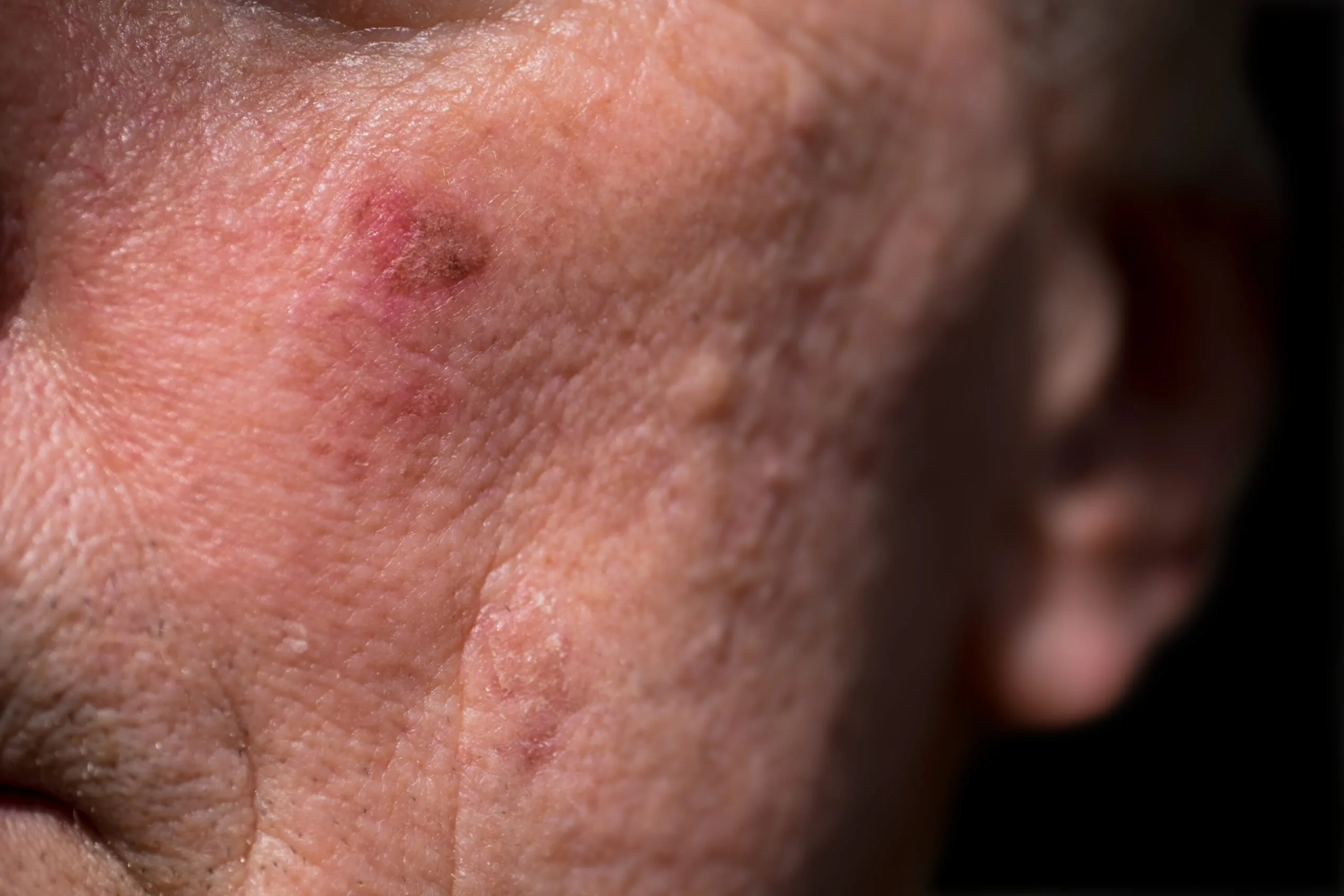
Actinic Keratosis
in Celina, TX

Everoak Dermatology offers expert care for actinic keratosis in Celina, TX, helping patients manage this common skin condition caused by sun exposure. Actinic keratosis appears as rough, scaly patches and can increase the risk of skin cancer if untreated. Our experienced dermatologists provide personalized evaluation and advanced treatment options to protect your skin’s health.

Understanding Actinic Keratosis

Actinic keratosis is a precancerous skin condition that develops after prolonged exposure to ultraviolet (UV) rays, often from the sun. These lesions typically appear as rough, scaly patches on sun-exposed areas like the face, ears, scalp, and hands. While most are harmless, some can progress to squamous cell carcinoma, making early detection and treatment important for your skin’s long-term health.

Recognizing Actinic Keratosis Symptoms

Rough, Scaly Skin Patches
Actinic keratosis often appears as rough, dry, or scaly patches on sun-exposed areas of the skin. These patches may feel like sandpaper and can be easier to detect by touch than by sight. Over time, they may become more noticeable or persistent, signaling the need for evaluation by a dermatologist.
Affected areas may develop persistent redness or pink coloration, distinguishing them from the surrounding healthy skin. This discoloration can be subtle or more pronounced, and it often indicates underlying skin cell changes. Monitoring any new or changing red spots is important for early diagnosis.
Some individuals with actinic keratosis experience sensations like itching or mild burning at the site of the lesion. These symptoms can come and go or persist over time. Persistent discomfort should prompt a professional skin evaluation to rule out progression or complications.
Tenderness or pain in a specific skin patch may develop, especially if the lesion becomes irritated. This symptom can be triggered by friction, sun exposure, or minor trauma to the area. If a spot becomes increasingly sensitive or sore, it is important to seek dermatological advice.
As actinic keratosis progresses, affected skin may thicken, develop a wart-like or crusty appearance, or feel different from the surrounding tissue. Noticing these changes in texture can be a key sign that the skin is undergoing abnormal changes. Early recognition and treatment help prevent further complications.

Main Causes Of Actinic Keratosis

The primary cause of actinic keratosis is long-term exposure to ultraviolet (UV) radiation from the sun or tanning beds. UV rays damage skin cells over time, leading to the development of rough, scaly patches on areas frequently exposed to sunlight. People with fair skin, light-colored eyes, or a history of frequent sunburns are at higher risk. Protecting your skin from UV exposure is essential to help prevent actinic keratosis.

Check Your Insurance Coverage

Benefits of Treating Actinic Keratosis

Why Choose Everoak Dermatology? 

At Everoak Dermatology, our skilled team specializes in diagnosing and treating actinic keratosis using the latest, evidence-based therapies. We take the time to understand your skin’s unique needs and create a custom treatment plan focused on both effectiveness and comfort. With a patient-centered approach and advanced technology, we help you achieve healthier skin and peace of mind. 
Not sure which treatment is best for you?
Check Your Insurance Coverage
Testimonials
If you want to do a skin-cancer screening, I 100% recommend Dr. Karavan. She has an extremely sharp eye and the goal is to hunt down the ugly duckling and take it. I’m very impressed with her attention to detail and am very grateful for her! She saved my life and was to the point. Dr. Karavand is not playing around when it comes to melanoma detection 👍

- Crystal D.

Healthier Skin
Starts Today
From life-saving skin cancer screenings to confidence-boosting aesthetic treatments, Everoak Dermatology is here to care for you at every stage.