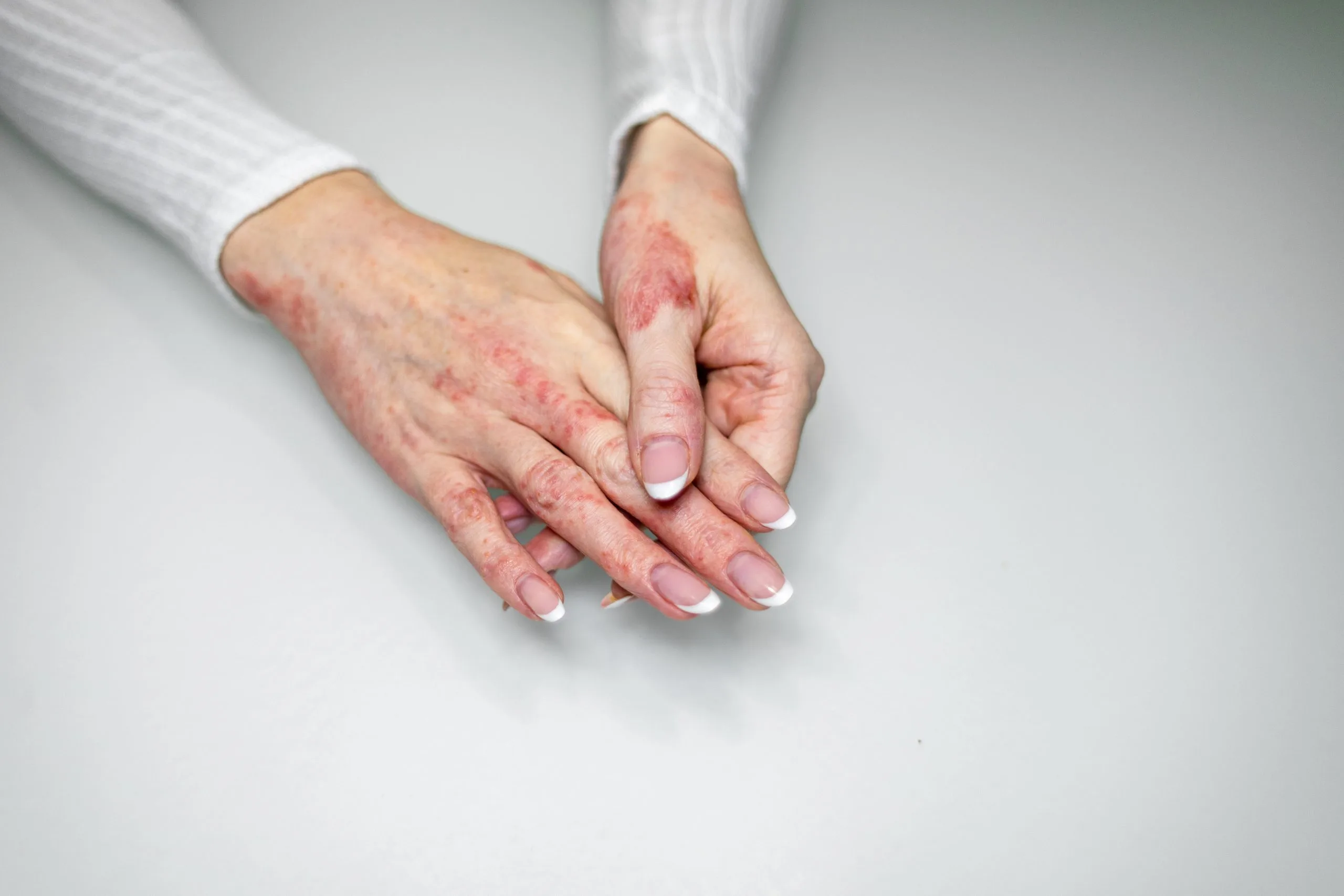
What helps with managing eczema flare-ups is a consistent routine of gentle skin care, daily moisturizing, avoiding personal triggers, and seeking medical treatment when needed. While there is no single cure, flare-ups can be controlled with the right habits and support. With these strategies, you can calm irritated skin, reduce itching, and go longer between flare-ups.
In this guide, we will walk through what causes flare-ups, how to soothe your skin, and practical steps you can take every day to keep eczema under control.
Eczema, also called atopic dermatitis, is a chronic condition where the skin becomes dry, red, itchy, and inflamed. A healthy skin barrier works like a brick wall – holding moisture in and keeping irritants out. In people with eczema, this wall has gaps, so moisture escapes easily and allergens or irritants slip in. When symptoms suddenly worsen, that is called a flare-up, and the skin may crack, ooze, or feel intensely itchy.
Your daily surroundings play a major role in how your skin behaves. Common environmental triggers include:
Dry, cold weather: Low-humidity winter air pulls moisture from the skin, causing widespread dryness and flares.
Hot, humid weather: The Texas summer heat causes sweating, and sweat itself can be a potent irritant.
Environmental allergens: Dust mites, pollen, pet dander, and mold penetrate a weakened barrier.
Irritants in products: Fragrances, dyes, and harsh surfactants (like sodium lauryl sulfate) in detergents, fabric softeners, soaps, shampoos, and cleaners.
Workplace exposures: Healthcare workers who wash hands constantly, hairstylists using chemicals, and industrial workers exposed to solvents or metals may flare more often.
Keeping a simple journal of when flares happen can help you connect your environment to your symptoms.
Irritated skin is fragile, so anything rough or harsh can make things worse. The tips below focus on calming your skin gently.
Skip harsh, scented soaps. Use a mild, non-soap, fragrance-free cleanser with a pH close to the skin’s natural level (around 5.5). Wash gently with your hands rather than scrubbing, and rinse completely. Afterward, pat – never rub – your skin with a soft towel, leaving it slightly damp before moisturizing to lock in hydration.
Hot water strips the skin of its natural protective oils, weakening the already compromised barrier. Opt for short, lukewarm baths or showers – no more than 10–15 minutes – and always apply moisturizer right after while your skin is still damp.
Scratching feels satisfying but damages the skin and can lead to infection. Instead, soak a clean, soft cloth in cool water, wring it out, and hold it against the itchy area for 15–20 minutes. The coolness constricts blood vessels, reduces inflammation, and calms the nerve endings that signal itch – helping break the itch-scratch cycle.
The fabrics touching your skin all day can soothe or irritate it. Choose soft, smooth, breathable materials like 100% cotton, bamboo, or silk. Avoid scratchy wool and stiff synthetics like polyester or nylon, which trap heat and sweat. Loose-fitting clothing is better than tight clothing, and wash new clothes before wearing them to remove finishing chemicals.
A steady, thoughtful skincare routine is the cornerstone of proactive eczema management.
If there is one non-negotiable rule, it is to moisturize relentlessly. Because eczema-prone skin cannot hold water effectively, moisturizers seal in hydration, protect against irritants, and help repair the barrier. Moisturize at least twice daily – and always right after bathing. Moisturizing only when skin feels dry is not enough.
Thicker products hold moisture in more effectively. There are three main types:
Ointments: The highest oil content (e.g., petroleum jelly). Thick and greasy, but the most effective at locking in moisture – ideal for very dry, scaly areas and overnight use.
Creams: Lower oil content than ointments but still hydrating and less greasy. Good for daytime; look for thick creams in a tub or tube rather than a pump bottle.
Lotions: The highest water content and thinnest. They evaporate quickly and may not provide enough of a barrier; preservatives and fragrances can also sting.
For moderate to severe eczema, a thick, bland cream or ointment works. Look for fragrance-free products for sensitive skin with barrier-supporting ingredients like ceramides and glycerin.
Consistency is key – moisturize at the same times each day, such as after your morning shower and before bed. The most critical moment is immediately after bathing: pat skin partially dry and apply a generous layer within three minutes. This “soak and seal” method traps water in your skin for maximum hydration. Keep moisturizer within easy reach – by your bed, in your bag, and at your desk.
What you don’t put on your skin matters as much as what you do. Become a label detective:
Avoid fragrances and dyes: Choose “fragrance-free” (not “unscented,” which may add a masking fragrance). Dyes serve no purpose and are common irritants.
Look for minimal ingredients: Simpler is often better – a long ingredient list means more potential for a reaction.
Avoid harsh preservatives: These are another common irritant.
Patch test new products: Test on a small, discreet area (like the inside of your elbow) for a few days before applying all over.
A dermatology professional can help you build a safe routine.
Home care goes a long way, but many people need medical intervention to get eczema under control. Treatments range from over-the-counter remedies to advanced prescription therapies.
For mild flares, over-the-counter 1% hydrocortisone cream can reduce itch and inflammation, and antihistamines may ease itching, especially at night. For moderate to severe eczema, these are often not enough. A dermatology professional can prescribe:
Topical corticosteroids: The most common prescription treatment, available in various strengths to powerfully reduce inflammation.
Topical calcineurin inhibitors (TCIs): Non-steroidal medications (e.g., tacrolimus, pimecrolimus) that suppress the immune response – useful for sensitive areas like the face, eyelids, and skin folds.
PDE4 inhibitors: Non-steroidal creams like crisaborole (Eucrisa) that block an enzyme in the inflammatory process.
Systemic medications: For severe, widespread eczema, oral or injectable options including traditional immunosuppressants and newer biologic drugs that target specific immune pathways.
Reach out to a dermatology professional if:
Your eczema does not improve with OTC treatments and diligent moisturizing.
Your flares are frequent, severe, or spreading, and the itch disrupts sleep or daily activities.
Your skin is weeping, crusting, or shows signs of infection (pus-filled bumps, yellow crusts, or pain).
Eczema is affecting your emotional well-being, work, or quality of life.
A proper diagnosis also confirms that eczema – and not another condition – is what you’re dealing with.
Beyond skincare and medication, small daily choices can have a profound impact on how often you flare. The most effective long-term strategy is prevention:
Stick to your daily moisturizing routine.
Identify and avoid your personal triggers – track symptoms and exposures in a diary.
Keep your home at a comfortable humidity level, using a humidifier in dry months.
Wear gloves when using cleaning products or washing dishes.
Keep fingernails short to reduce skin damage from scratching.
Healthy skin starts from within. Drink plenty of water to keep your body and skin hydrated. While no single “eczema diet” works for everyone, a balanced diet rich in fruits, vegetables, and anti-inflammatory foods like omega-3 fatty acids (found in fatty fish like salmon) and leafy greens supports skin health. If you suspect a food trigger, discuss it with a professional before cutting it out.
Smoking harms the skin in many ways. Nicotine constricts blood vessels, reducing blood flow and oxygen to the skin and slowing healing, while tobacco smoke is a direct irritant that increases inflammation. Quitting is one of the most impactful changes you can make for your eczema and overall health.
Since stress is a major trigger, actively managing it is essential. Try:
Deep breathing exercises: A few minutes of slow, deep breaths can quickly calm the nervous system.
Meditation or mindfulness: Apps like Calm or Headspace can guide short daily sessions.
Gentle exercise: Walking, stretching, yoga, or tai chi eases tension and reduces stress hormones.
Good sleep habits: Rest helps your body manage inflammation and repair the skin.
Hobbies: Reading, gardening, or listening to music provides a mental break.
Eczema flare-ups can be uncomfortable and frustrating, but they are manageable with the right approach. What helps with managing eczema flare-ups comes down to gentle skin care, daily moisturizing, avoiding your personal triggers, reducing stress, and getting professional help when home care is not enough.
If your eczema is not improving on its own, the right plan can help you manage symptoms and improve your quality of life.

About the Author
Dr. Mahsa Karavan