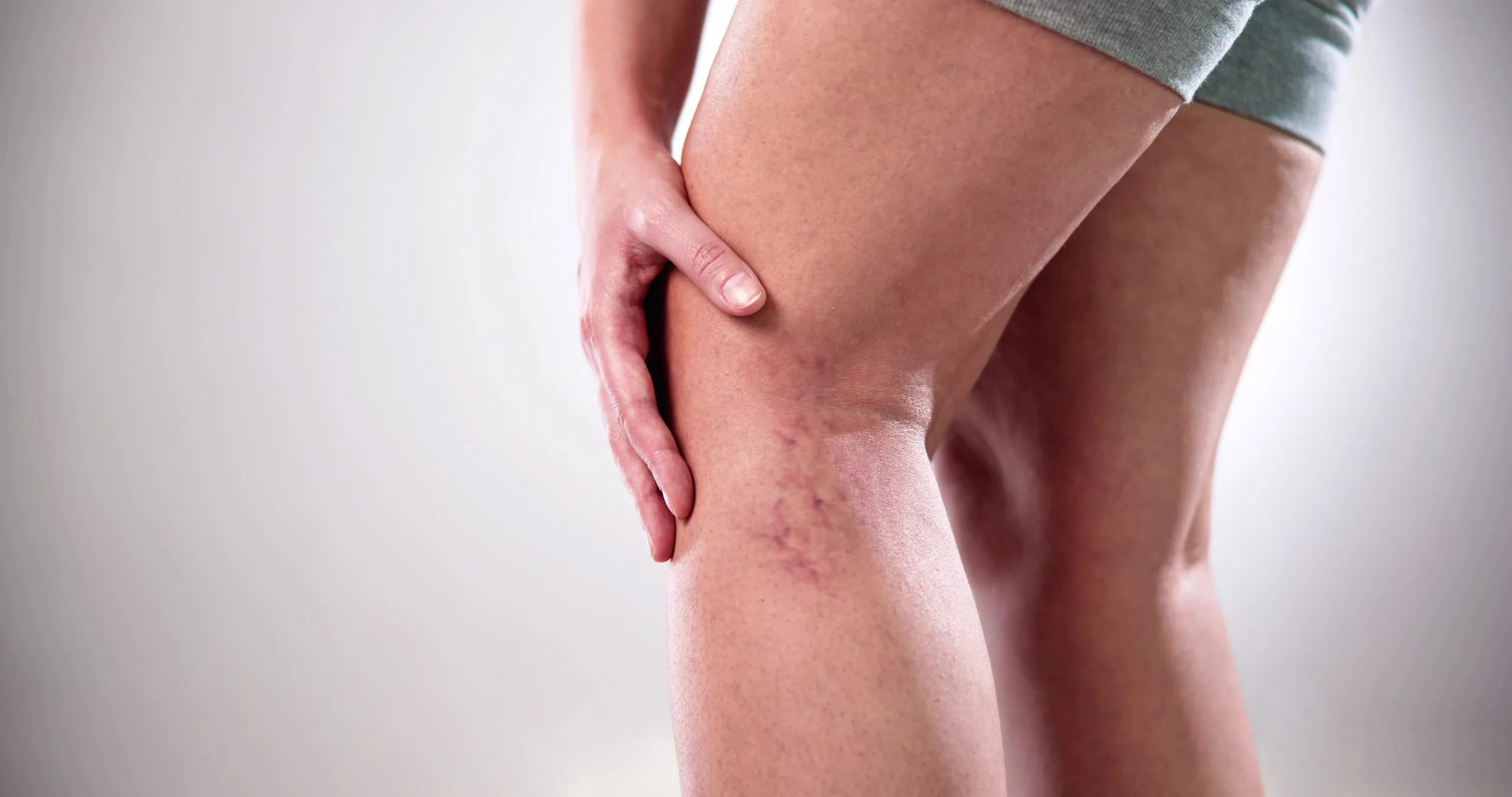
Spider veins – those thin, web-like clusters of red, blue, or purple lines visible just beneath the skin – are a common cosmetic concern affecting the legs. If you’re wondering how to get rid of spider veins on your legs, the most effective approach combines professional treatments, such as sclerotherapy, with supportive lifestyle changes, such as regular exercise, wearing compression stockings, and elevating your legs. While some home remedies can help prevent spider veins from worsening, professional dermatological treatments remain the gold standard for actually eliminating existing veins.
Spider veins, known medically as telangiectasias, are small, dilated blood vessels that sit close to the surface of the skin. They typically measure less than one millimeter in diameter and appear in branching, web-like patterns, which is how they got their name. They can be red, blue, or purple and most commonly show up on the legs (particularly the thighs, calves, and ankles), though they can also appear on the face and other areas of the body.
It’s important to distinguish spider veins from varicose veins. Varicose veins are much larger, raised, and often have a rope-like, bulging texture caused by more significant valve failure in deeper veins. Spider veins are flat or only slightly raised and are generally considered a cosmetic issue. While usually painless, some people experience mild burning, itching, or aching around the affected areas, especially after prolonged standing. They affect an estimated 50 to 55 percent of women and 40 to 45 percent of men at some point in their lives. Several overlapping factors contribute to their development:
Genetics: If your parents or grandparents had spider veins, you’re significantly more likely to develop them. Family history is one of the strongest predictors.
Hormonal changes: Fluctuations in estrogen and progesterone – during puberty, pregnancy, menopause, or while taking hormonal birth control – can weaken vein walls and valves.
Pregnancy: The increased blood volume during pregnancy, combined with hormonal shifts and pressure from the growing uterus on pelvic veins, makes spider veins especially common in pregnant women.
Prolonged standing or sitting: Jobs or habits that keep you in one position for extended periods reduce the efficiency of blood flow in the legs, increasing pressure on leg veins.
Age: Vein walls and valves naturally lose elasticity over time. Spider veins become increasingly common with each decade of life.
Obesity: Excess body weight places additional pressure on leg veins, accelerating valve deterioration and vein dilation.
Sun exposure: UV damage can cause spider veins, particularly on the face, but chronic sun exposure can also break down collagen and contribute to their appearance on the legs.
Previous vein damage or blood clots: Injury to veins, leg trauma, or a history of deep vein thrombosis can compromise valve function and lead to spider vein formation. You can’t change your genetics or stop aging, but you can address lifestyle factors that accelerate spider vein development.
When it comes to learning how to get rid of spider veins on legs, it helps to think in two categories: what you can do at home to support vein health and slow progression, and what professional treatments can do to actually eliminate existing spider veins. Both play important roles.
Home-based strategies won’t make existing spider veins disappear, but they can reduce symptoms, slow the development of new veins, and support recovery after professional treatment.
Compression stockings are one of the most widely recommended first-line interventions for spider veins. These specially designed garments apply graduated pressure – tighter at the ankle and gradually looser as they move up the calf or thigh. This gradient pressure helps push blood upward toward the heart, counteracting the downward pull of gravity that contributes to blood pooling in weakened veins.
Improve circulation in the lower legs throughout the day
Reduce swelling and achiness that sometimes accompany spider veins
Slow the development of new spider veins by supporting vein wall integrity
Support healing after professional spider vein treatments like sclerotherapy
Compression stockings come in different pressure levels, measured in millimeters of mercury (mmHg). Over-the-counter options in the 15–20 mmHg range work well for mild spider veins and general prevention. Higher-compression versions (20–30 mmHg or above) are typically recommended by a provider based on individual needs. For the greatest benefit, put them on first thing in the morning – before gravity has had time to pull blood downward – and wear them throughout the day.
Several everyday habits can make a meaningful difference in vein health:
Stay active: Walking, cycling, swimming, and other cardiovascular exercise activate the calf muscles, which act as a natural pump to push blood back up toward the heart. Even a 20- to 30-minute daily walk can improve leg circulation significantly.
Elevate your legs: When resting, prop your legs above heart level for 15 to 20 minutes, three to four times a day. This simple practice reduces venous pressure and helps blood drain from the legs.
Avoid prolonged standing or sitting: If your job requires long periods in one position, take breaks every 30 to 60 minutes to walk around, stretch, or do calf raises. Even flexing and pointing your feet while seated can help activate the calf muscle pump.
Maintain a healthy weight: Carrying excess weight puts additional pressure on your leg veins, accelerating valve deterioration and vein dilation.
Stay hydrated and eat a fiber-rich diet: Proper hydration keeps blood flowing smoothly, while dietary fiber prevents constipation – a condition that increases abdominal pressure and can contribute to vein problems in the legs.
Avoid crossing your legs for long periods: While this alone probably won’t cause spider veins, it can restrict circulation in someone already predisposed to vein issues.
Wear supportive shoes: Low-heeled shoes engage the calf muscles more effectively than high heels, promoting healthier blood flow during walking.
Protect your skin: Apply a broad-spectrum sunscreen to your legs to protect the skin and underlying structures from sun damage, which can worsen the appearance of veins.
Some people explore topical creams, supplements, or natural remedies for spider veins. A few worth noting:
Horse chestnut seed extract has some clinical evidence suggesting it can improve symptoms of chronic venous insufficiency, though it won’t erase visible spider veins.
Vitamin K creams are marketed for spider veins, but scientific evidence supporting their effectiveness for leg veins is limited.
Witch hazel and apple cider vinegar are popular home remedies, but neither has strong clinical evidence for spider vein reduction.
The bottom line: home remedies can support overall vein health and may provide mild symptom relief, but they cannot eliminate spider veins that have already formed. These products should not be considered a substitute for medical treatment.
Professional treatments target spider veins directly, collapsing or sealing them so the body gradually absorbs them and reroutes blood through healthier veins. These treatments are performed in-office and typically require little to no downtime.
Sclerotherapy is considered the gold-standard treatment for spider veins on the legs. During the treatment, a specialized solution called a sclerosant is carefully injected directly into the targeted spider veins using a very fine needle. This solution irritates the inner lining of the vein, causing it to swell shut, collapse, and seal closed. Over the following weeks, the body naturally absorbs the treated vein, and it fades from view. Blood flow is simply rerouted to healthier, deeper veins.
Key points about sclerotherapy:
Targeted and precise. The solution is injected directly into individual spider veins, allowing for highly specific treatment.
Minimal downtime. Most people return to normal activities the same day. Walking is typically encouraged immediately after treatment.
Gradual results. Treated veins usually fade over three to six weeks, with some taking up to three months to fully disappear.
Multiple sessions may be needed. Depending on the number and extent of spider veins, two to four treatment sessions spaced several weeks apart may be recommended for the clearest results.
Compression stockings after treatment. Wearing compression stockings for a period after sclerotherapy helps optimize results by keeping the treated veins compressed as they heal.
Sclerotherapy has been used for decades and remains the most commonly performed treatment for leg spider veins worldwide.
Laser and light-based treatments are another excellent option for eliminating spider veins. These non-invasive procedures use focused light energy to heat and damage spider veins, causing them to collapse and gradually be absorbed by the body. Advanced aesthetic technologies including Intense Pulsed Light (IPL) are available to address vascular concerns.
During treatment, pulses of light are directed at the spider vein. The energy is absorbed by the blood within the vein, generating heat that damages the vessel wall and causes it to seal off. Laser therapy is particularly useful for:
Very small spider veins that are too fine to inject
Spider veins in areas where sclerotherapy may be less practical, including the face
Patients who prefer a needle-free approach
Multiple laser sessions are usually required, and treated areas may temporarily appear slightly red or bruised. Laser treatment tends to work well for smaller spider veins, while sclerotherapy is often preferred for larger or more numerous clusters.
For the vast majority of spider veins on the legs, sclerotherapy and laser therapy are the primary treatments. However, in cases where spider veins coexist with underlying venous insufficiency or varicose veins, additional evaluation and treatment of deeper vein problems may be necessary before addressing the surface-level spider veins. During your consultation, all appropriate options for your specific concerns will be discussed to develop a comprehensive plan that aligns with your aesthetic goals.
Most spider veins are harmless, but there are situations where a professional evaluation is important:
Rapid appearance of new spider veins – A sudden increase may indicate underlying venous insufficiency.
Pain, swelling, or warmth around spider veins – These symptoms can suggest inflammation or deeper vein involvement.
Skin changes near the veins – Darkening, thickening, or ulceration of the skin around spider veins warrants evaluation.
Bleeding from a spider vein – While uncommon, surface veins can occasionally bleed if injured and should be evaluated promptly.
Spider veins accompanied by leg heaviness, cramping, or restless legs – These symptoms may point to chronic venous insufficiency.
Cosmetic concern affecting your quality of life – If spider veins make you self-conscious or limit your clothing choices, that’s a perfectly valid reason to seek treatment.
A professional evaluation is essential for an accurate diagnosis and to rule out any underlying venous issues.
While spider veins are incredibly common, you don’t have to live with them. Lifestyle changes like regular exercise, leg elevation, compression stockings, and avoiding prolonged inactivity are excellent for managing symptoms and preventing new veins. However, effective removal of existing spider veins requires targeted professional procedures. Treatments like sclerotherapy and laser therapy provide reliable solutions. If spider veins are bothering you, a dermatology evaluation can help you understand your options and create a treatment plan tailored to your legs.

About the Author
Dr. Mahsa Karavan