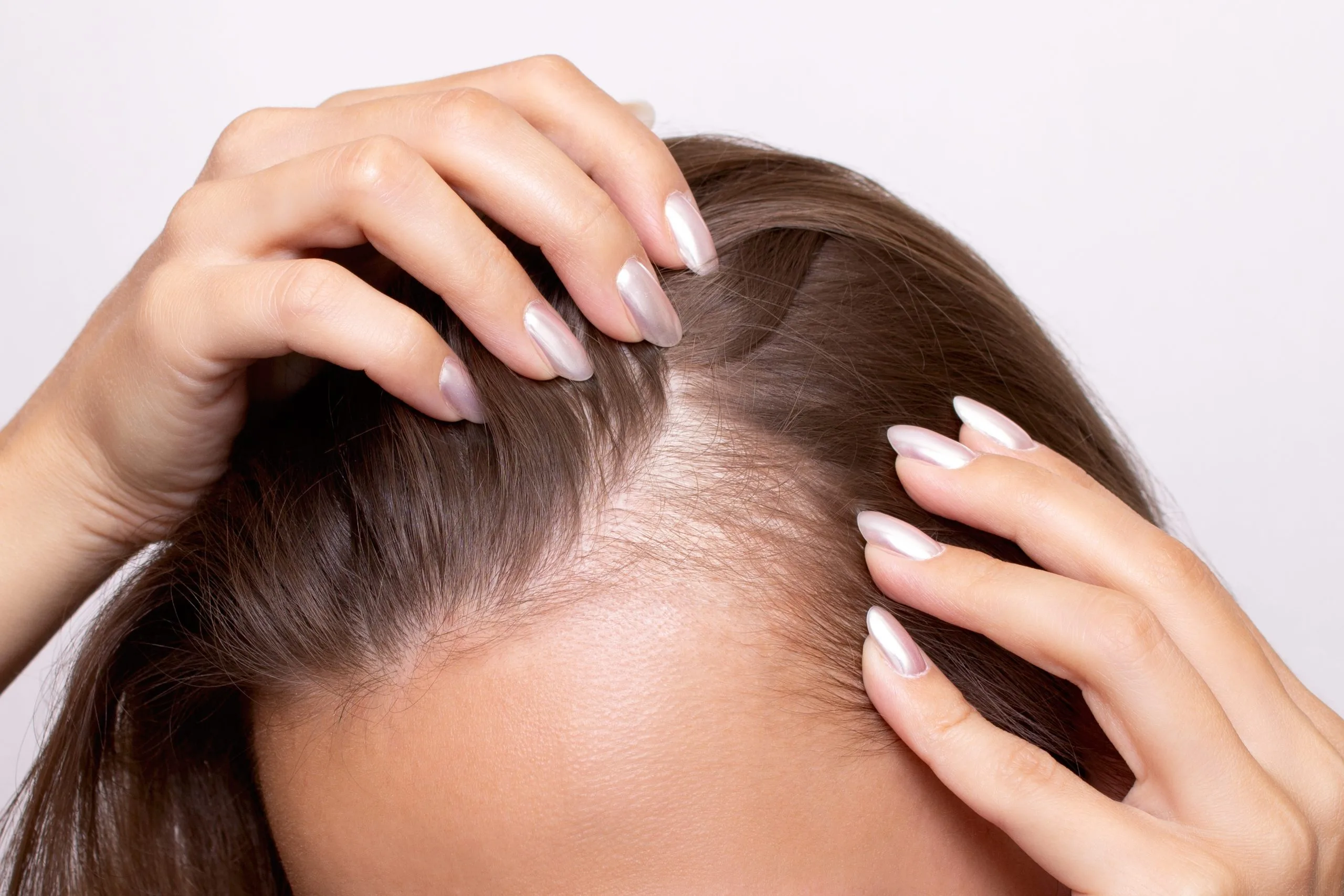
Hair loss in women can occur for many reasons, including genetics, hormonal changes, stress, illness, nutritional deficiencies, and certain hairstyles. The good news is that increased shedding or thinning does not always mean permanent hair loss. In many cases, identifying the underlying cause early can help protect existing hair and support regrowth.
Our personalized hair loss evaluation and treatment can help determine why your hair is changing and which treatment options may be right for you.
It is normal to lose some hair every day. Hair naturally moves through cycles of growth, rest, and shedding. The concern begins when shedding becomes noticeably heavier, your hair looks thinner, or your scalp becomes more visible.
Women can experience hair loss at any age, and multiple factors may be involved. Some causes are temporary, while others require ongoing treatment to slow progression and preserve hair density.
Common causes include:
Female-pattern hair loss: Often called androgenetic alopecia, this hereditary condition causes gradual thinning, especially around the top of the scalp and part line.
Stress or illness: Significant physical or emotional stress, illness, surgery, or other major changes can trigger excessive shedding called telogen effluvium.
Hormonal changes: Pregnancy, postpartum changes, menopause, and certain hormonal conditions can affect the hair growth cycle.
Nutritional deficiencies: Low iron and other nutritional concerns can contribute to thinning or increased shedding.
Thyroid problems: Changes in thyroid function can disrupt the normal hair growth cycle.
Tight hairstyles: Repeated pulling from braids, ponytails, buns, extensions, or other styles can cause traction alopecia.
Autoimmune conditions: Conditions such as alopecia areata can cause sudden, patchy hair loss.
Scalp inflammation: Persistent itching, scaling, or inflammation can affect scalp and follicle health.
Because these causes can look similar at first, guessing the cause based on shedding alone can be frustrating. A proper evaluation is often the most useful first step.
Hair loss is not always dramatic. In fact, some of the earliest changes can be subtle enough to overlook.
You may notice:
A widening part when your hair is styled
More scalp showing through on the top of your head
A smaller or thinner ponytail
More hair in your shower drain, brush, or on your pillow
Hair that seems finer or weaker than it used to be
Gradual thinning around the crown
Scalp itching, burning, tenderness, flaking, or redness
The pattern and timing matter. Sudden shedding after an illness or stressful event can point toward a different cause than thinning that has slowly progressed over several years.
Female-pattern hair loss is one of the most common causes of progressive thinning in women. Genetics play an important role, and hormonal factors can influence how sensitive individual hair follicles are.
Rather than suddenly losing an entire area of hair, the follicles gradually produce finer, shorter hairs. Over time, this can make the scalp more visible and reduce overall volume.
This type of hair loss can be especially frustrating because it often develops slowly. You may first notice that your usual hairstyle does not look as full, your part appears wider, or you need more volume products to achieve the same look.
The earlier female-pattern hair loss is identified, the greater the opportunity to preserve existing follicles and improve density.
Learn more about androgenetic alopecia treatment.
Sometimes the problem is not gradual thinning but a sudden increase in shedding.
Telogen effluvium can occur when a significant physical or emotional stressor disrupts the normal hair-growth cycle. Triggers can include illness, major stress, hormonal changes, or other events that place strain on the body. The increased shedding may not appear immediately; it can become noticeable weeks or months after the triggering event.
This can be alarming because large amounts of hair may come out during washing or brushing. Fortunately, telogen effluvium is often temporary once the underlying trigger is identified and addressed.
That does not mean you should simply ignore significant shedding. A dermatologist can help determine whether the shedding fits this pattern or whether another condition may be contributing.
Your styling routine can also affect your follicles.
Repeated tension from tight braids, ponytails, buns, extensions, or other hairstyles can cause traction alopecia. Early signs may include thinning around the temples and hairline, broken hairs, scalp discomfort, or small areas of inflammation.
The important point is that this type of hair loss may be preventable and, when recognized early, potentially reversible.
Consider giving your hair a break from styles that pull tightly at the roots. Varying hairstyles, reducing tension, and avoiding repeated stress on the same areas can help protect your follicles.
If thinning continues despite changing your styling habits, it is worth having your scalp evaluated.
There is no single treatment that works for every type of hair loss. The right solution starts with knowing what is actually happening.
At EverOak Dermatology, a hair-loss evaluation includes a detailed assessment of the hair and scalp. A high-magnification dermatoscope may be used to examine follicle health and scalp changes. When appropriate, laboratory testing can help identify issues such as thyroid imbalances, iron or vitamin D deficiencies, or hormonal changes. In more complex cases, a scalp biopsy may be recommended to clarify inflammatory or autoimmune causes.
This matters because treating the wrong condition can waste time while the underlying problem continues.
You do not have to wait until hair loss becomes severe before seeking help.
Consider scheduling an evaluation if you notice:
Sudden or rapidly increasing shedding
A widening part or progressive thinning
Patchy bald spots
Hair loss along the hairline
Persistent scalp itching, burning, pain, or scaling
Hair loss following an illness, major stress, or hormonal change
Some forms of hair loss are temporary, while others are progressive. Getting the correct diagnosis early can make it easier to choose an effective treatment strategy.
The most effective approach is to identify the cause first and then build a treatment plan around it. At EverOak Dermatology, hair-loss care combines scalp evaluation, diagnostic testing when needed, medical treatments, and advanced technologies to create a personalized plan for women experiencing thinning or shedding.
If you are concerned about hair loss, learn more about hair and scalp conditions treated or schedule a comprehensive hair loss evaluation. Finding the cause is the first step toward protecting the hair you have and working toward healthier, fuller-looking hair.

About the Author
Dr. Mahsa Karavan